Who we are
Get insight on who we are as a church. Why we do what we do and how we do it.
Our Vision
To be a Christ-centred, Spirit-filled, and purpose-driven Diocese, raising a godly people equipped for worship, discipleship, service, and societal transformation.
Our Mission
- To proclaim the Gospel of our Lord Jesus Christ in the power of the Holy Spirit to every soul within our reach.
- To disciple believers through sound biblical teaching, sacraments, and intentional pastoral care
- To promote clergy and laity welfare through strategic empowerment initiatives and lifelong support systems.
- To build sustainable physical and digital infrastructure that enhances worship, evangelism, education, and social outreach.
- To uphold the Anglican heritage of holiness, liturgical depth, social justice, and mission in a rapidly changing world.
Our Core Values
- Christ-Centredness – Jesus Christ is the foundation, focus, and fulfilment of all our labours and aspirations.
- Biblical Integrity – We uphold the authority of the Scriptures in doctrine, conduct, and teaching.
- Excellence in Service – We strive for quality, diligence, and accountability in all we do for God and humanity.
- Sacrificial Love – We serve with compassion, generosity, and humility, reflecting the heart of Christ.
- Unity and Fellowship – We promote harmony, inclusiveness, and respect among all members of the Diocese.
- Faithfulness and Stewardship – We are committed to transparency and responsible management of resources entrusted to us.
- Mission and Witness – We are passionate about evangelism, discipleship, and making Christ known in all spheres of life.
Our Strategic Objectives
1. Spiritual Renewal Discipleship
- Foster deep spiritual growth through Word-centred teaching, sacramental life, and fervent prayer.
- Strengthen lay and clergy formation through theological training and mentoring.
2. Evangelism and Church Growth
- Launch targeted evangelistic campaigns in towns, villages, and digital spaces.
- Plant new congregations and strengthen existing ones with trained personnel and resources.
3. Infrastructure Development
- Establish the Retreat and Vocational Centre as a hub for spiritual renewal, skill acquisition, training, and rest.
- Construct a central Administrative Building to serve as the operational heart of the Diocese.
- Invest in transport, media equipment, and other directorate tools for effective outreach.
4. Clergy and Laity Welfare
- Endow and administer Trust Funds for health, education, housing, insurance, and retirement support.
- Promote schemes for economic empowerment and skill development.
5. Educational and Social Empowerment
- Offer scholarships and training for youth and underprivileged members of the Diocese.
- Partner with schools, NGOs, and donors to expand our social impact.
6. Sustainable Governance and Leadership
- Ensure accountability, transparency, and professionalism in diocesan administration.
- Build Clergy and laity through leadership development and capacity-building initiatives.
4-POINT AGENDA (REST)
R - RECOVER
E - EMPOWER
S - SHINE FORTH
T - TAKE OVER
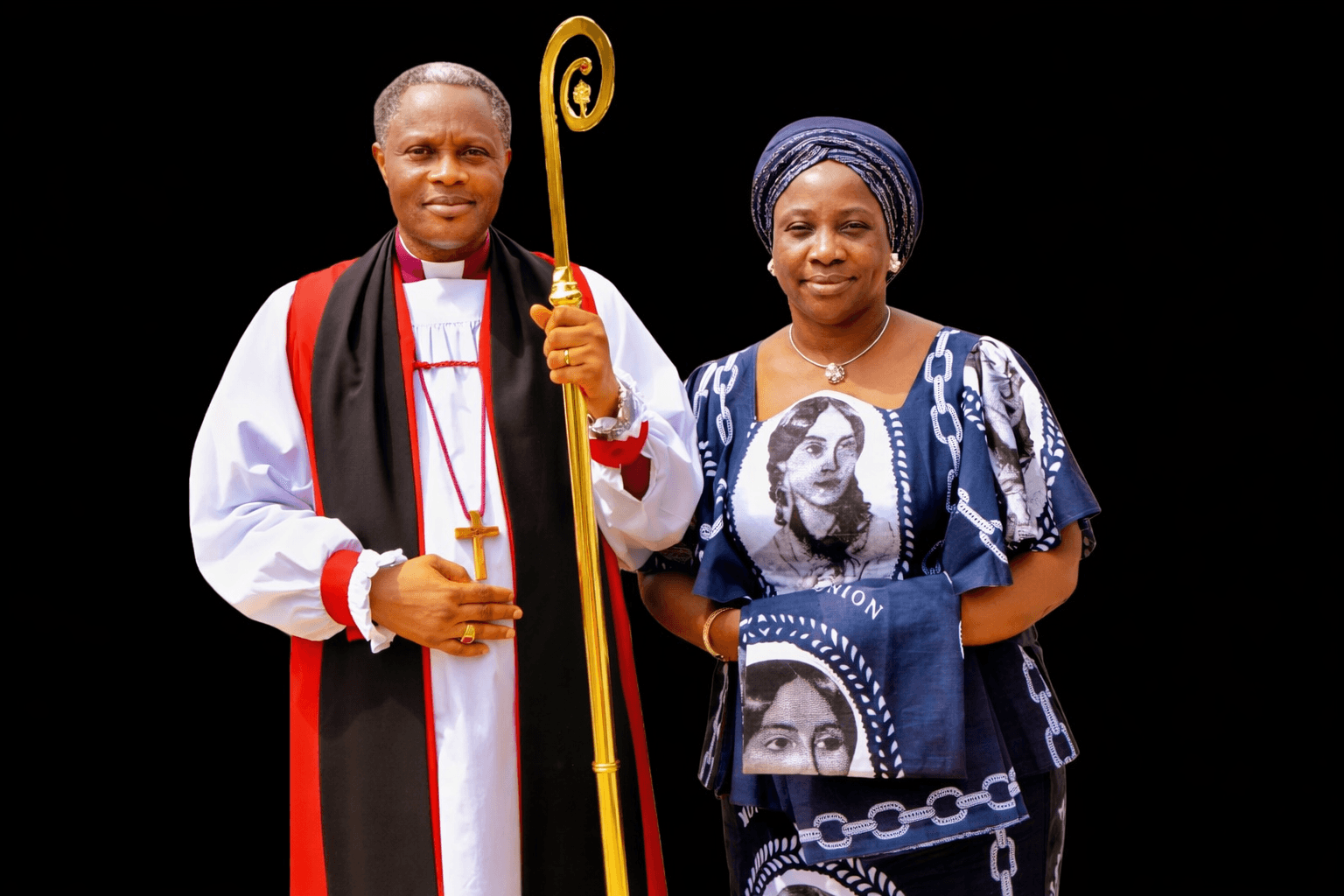
“To God be the glory; great things He has done.”
History of our church
The Diocese of Ilesa South West was formally inaugurated on 18 January 2009, a landmark day in the life of Anglicanism in Ijesaland. On this historic occasion, Holy Trinity Anglican Church, Omofe, Ilesa, was elevated to the status of a Cathedral, becoming the ecclesiastical seat of the newly created Diocese. On the same day, the Bishop‑Elect, The Rt. Revd. Samuel Olukunle Egbebunmi, was enthroned as the first Bishop of the Diocese by the Primate and Metropolitan of All Nigeria, The Most Revd. Dr. Peter Jasper Akinola.
The uniqueness of the Diocese of Ilesa South West lies in its organic formation as a single ecclesiastical family. Holy Trinity Church, Omofe, stands as the parent church, while the other parishes constitute her offspring. Consequently, the history of the Diocese is inseparably intertwined with the history of Holy Trinity Church, Omofe, Ilesa.
For decades, Holy Trinity Church, Omofe, has occupied a place of honour among Anglican churches in the region. There has always been a sense—sometimes beyond human explanation—that Omofe possesses a special grace which places her first among equals. This heritage of faithfulness has been carefully preserved, and by the grace of God, the banner of the Church continues to fly honourably.
In Yoruba thought, it is often said that “the name is the man behind the mask.” In this light, the name Holy Trinity Church, situated on Omofe Hill, speaks profoundly of its identity and mission. The Holy Trinity represents the fullness of the Supreme Being, to whom all glory and honour belong. Omofe—literally “children of Ofe”—connotes an intrinsic, unseen power within a system, ever present and ready to propel it toward success. The convergence of the Holy Trinity and the spiritual significance of Omofe Hill has served as a powerful catalyst for the remarkable achievements recorded over the 112 years of the Church’s existence.
The elevation of Holy Trinity Church to Cathedral status and the inauguration of the Diocese are fruits of God’s divine will, the solid foundation laid by the founding fathers, the selfless dedication of clergy and church workers past and present, and the steadfast commitment of faithful members who toiled and worshipped on Omofe Hill. These men and women are instruments through whom God has continually worked to make today’s achievements possible.
Early History of Holy Trinity Church, Omofe
The story of Holy Trinity Church, Omofe, traces its roots to the arrival of Revd. David Hinderer, an Anglican missionary, who came to Ilesa on 24 August 1858. He established a church at Wasimi, Iloro Quarters, Ilesa, and the new congregation was placed under the care of Mr. Agbebi.
Thirty‑six years later, in 1894, members of the church residing in Omofe, Idasa, Ikoti, Igbogi, Isokun, Iwere, Isinkin, and surrounding areas became increasingly burdened by the long distance they had to trek to worship at Iloro. This challenge led them to establish a house fellowship at the residence of Daddy James Orioye. The fellowship flourished rapidly, marked by renewed zeal and commitment to the spread of the Gospel.
When Revd. Oyebode arrived in Ilesa on 5 April 1895 and found the congregation at Orioye’s house thriving, he directed Mr. Agbebi to take charge of the emerging Omofe congregation. Subsequently, on 7 September 1896, a tent church building was erected on a parcel of land secured through L’Omofe Chief Fapuro, with contributions from the families of Pa Osifila Falomo and others.
The tent church was formally dedicated on 29 September 1896, St. Michael’s Day, by Revd. Oyebode, and was named Holy Trinity Church in grateful recognition of the manifest working power of the Trinity among the foundation members. On that historic day, Mr. Agbebi preached the sermon from Psalm 113:1–5, laying a spiritual cornerstone for what would become one of the most significant Anglican institutions in the region.
From these humble beginnings, Holy Trinity Church, Omofe, grew steadily in faith, influence, and service, ultimately giving birth to the Diocese of Ilesa South West—a testimony to God’s abiding presence and unfailing grace.

Our Solutions
Connecting the dots between innovation and effectiveness
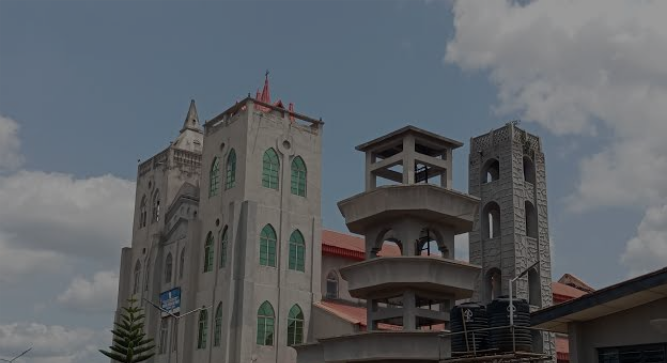
CATHEDRAL
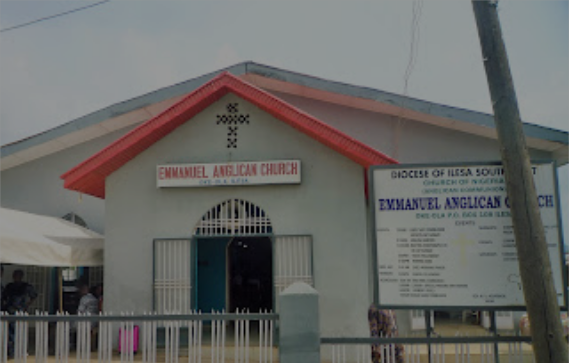
OKE-OLA ARCHDEACONRY
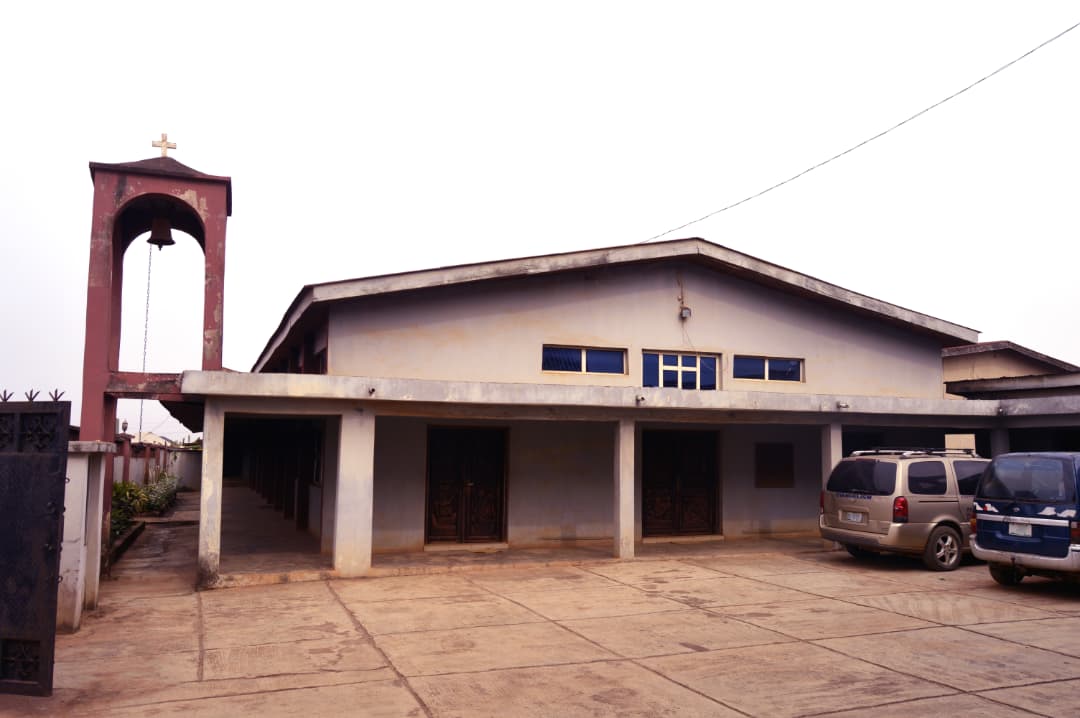
ILAJE ARCHDEACONRY
OKE-OMIRU ARCHDEACONRY
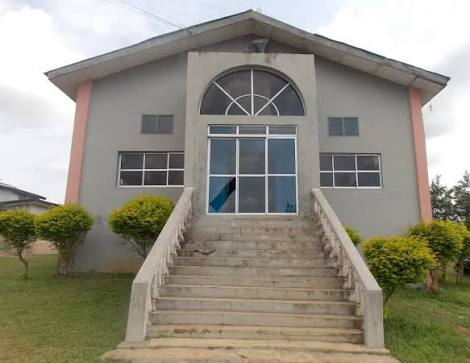
MUROKO ARCHDEACONRY
CONVOCATION OF CHURCHES